
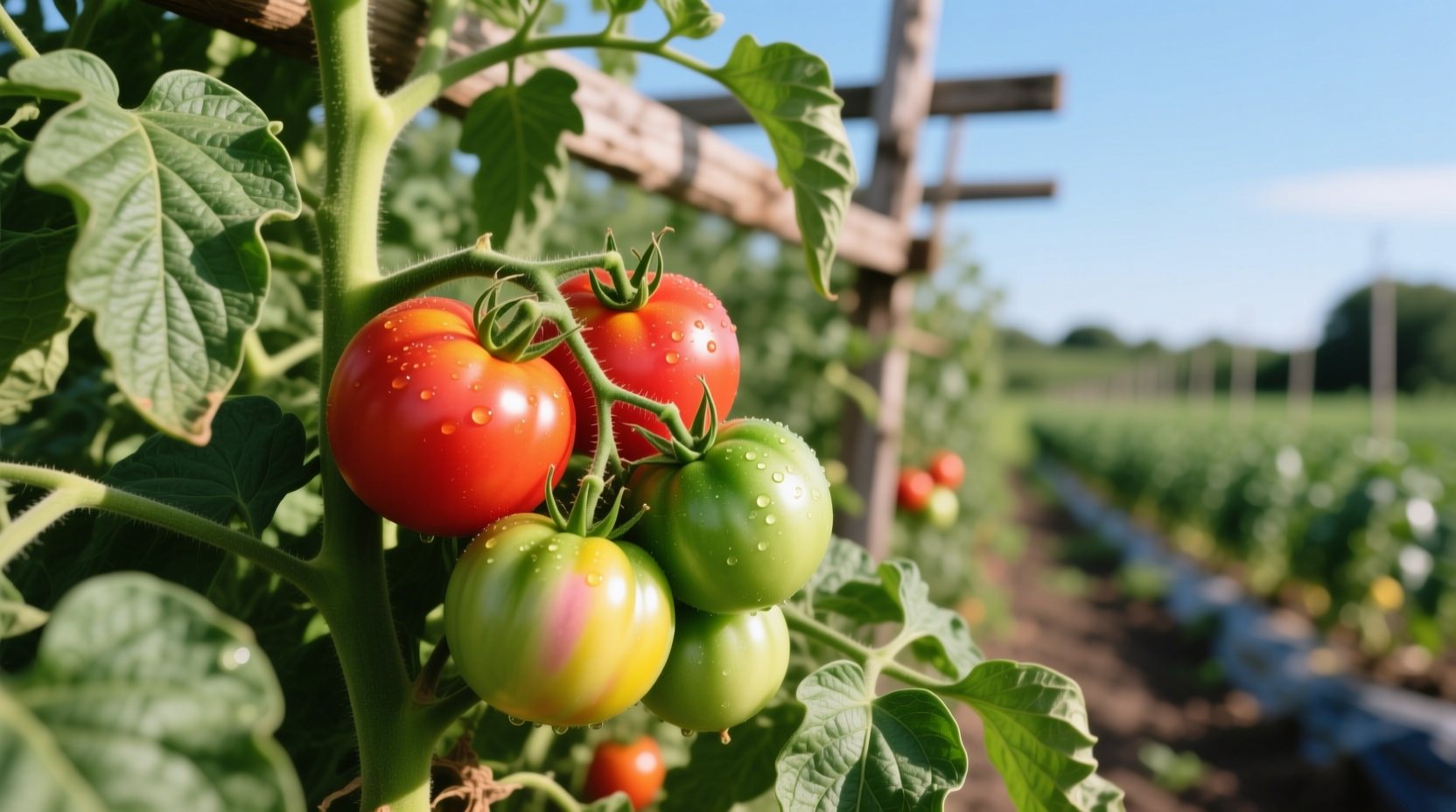
Understanding Tomato Ripening: It’s Not Just About Time
Many gardeners assume ripening is passive—a matter of waiting long enough after fruit set. But tomato ripening is an active, hormone-driven biochemical process governed by ethylene gas, light, temperature, and nutrient status. Unlike fruits such as bananas or apples, tomatoes are climacteric: they produce a surge of ethylene once they reach the “mature-green” stage, triggering enzymatic breakdown of chlorophyll and simultaneous synthesis of red lycopene and orange beta-carotene. This transition requires precise environmental coordination—not just calendar days.
The USDA classifies tomato ripeness into six stages: green (unexpanded, hard), breaker (first blush of yellow/orange/red at blossom end), turning (10–30% color change), pink (30–60%), light red (60–90%), and red (fully colored, firm but yielding). Most home growers misidentify “mature-green” as “unripe”—but it’s actually the critical physiological tipping point. A tomato at mature-green has fully developed seeds, maximum sugar accumulation, and intact cell walls—ready to respond to ethylene. If it stalls here, the signal isn’t being sent or received.
Top 7 Causes of Tomatoes Not Ripe—and How to Fix Each
1. Temperature Extremes: The #1 Ripening Blocker
Tomato pigments form only within a narrow thermal window. Lycopene synthesis peaks between 68–77°F (20–25°C) and stops entirely above 85°F (29°C) or below 50°F (10°C). Carotene production halts above 90°F (32°C). This explains why tomatoes often stay stubbornly green during midsummer heatwaves—even with full sun and ample water.
Actionable fix: Monitor air temperature at fruit level—not just ambient weather reports. Use a min/max thermometer clipped to a stake near your plants. When highs exceed 85°F for three consecutive days:
- Apply 30–50% shade cloth during peak sun (11 a.m.–3 p.m.), especially on west-facing balconies or south-exposed gardens;
- Mulch heavily with 3–4 inches of straw or shredded bark to keep root-zone soil below 75°F;
- Avoid overhead watering midday—it raises leaf surface temps and invites fungal issues without cooling roots effectively.
Conversely, cool-season ripening stalls when nights drop below 55°F (13°C). In coastal or high-elevation zones (USDA Zones 5–7), use floating row covers overnight—but remove them by 9 a.m. to prevent humidity buildup and ensure pollination.
2. Nitrogen Overload: The Leafy Trap
Excess nitrogen encourages vigorous vine and leaf growth at the expense of fruit maturation. High N levels suppress ethylene receptor sensitivity and divert sugars away from fruit toward new shoots. You’ll see dark green, lush foliage, few flowers, and small, slow-ripening fruit—even if tomatoes appear plump.
Actionable fix: Stop all nitrogen-rich fertilizers (fish emulsion, blood meal, synthetic 10-10-10) once fruit reaches marble size. Switch to a low-nitrogen, high-potassium formula (e.g., 2-8-10 or 0-0-50 potassium sulfate) applied every 10–14 days. Potassium activates enzymes involved in sugar transport and pigment formation. For container-grown tomatoes, flush pots with 3x volume of water to leach excess salts before switching feeds.
3. Inconsistent Watering: Stress That Silences Ethylene
Tomatoes need consistent soil moisture—not constant saturation. Drought stress reduces ethylene production; overwatering suffocates roots, limiting oxygen needed for respiration and pigment synthesis. Fluctuating moisture also causes cracking and uneven ripening.
Actionable fix: Use the “finger test”: insert index finger 2 inches into soil near the base. If dry at that depth, water deeply until runoff appears at pot drainage holes or garden bed edges. Then wait until the top 1 inch dries before next watering. For in-ground plants, install drip tape under mulch—delivering 1–1.5 inches per week, split over two sessions. Container tomatoes may need daily watering in hot, windy conditions—but always verify need first.
4. Insufficient Light: Shade Stalls Biochemistry
Fruit needs direct sunlight to warm sufficiently for pigment activation—even though leaves do most photosynthesis. Tomatoes shaded by dense foliage, nearby structures, or overgrown neighboring plants receive inadequate radiant energy. Fruit on the interior or north side of a vine often remains green while outer fruit ripens.
Actionable fix: Prune selectively—not aggressively. Remove only non-fruiting suckers below the first flower cluster and any leaves shading ripening fruit. Never strip more than 20% of total foliage at once. Use soft twine or tomato clips to gently reposition branches, exposing green fruit to morning sun. On balconies, rotate pots 90° every 3 days to ensure even exposure.
5. Harvesting Too Early: Missing the Mature-Green Threshold
Many gardeners pick tomatoes at the “full-green” stage—firm, glossy, and uniformly green—assuming they’ll ripen off-vine. But only mature-green fruit (slightly softer, duller skin, faint yellow tinge at blossom end) possesses the internal readiness to convert starches to sugars and synthesize pigments post-harvest. Full-green fruit rarely ripens evenly and often develops mealy texture.
Actionable fix: Learn to identify mature-green: gently squeeze near stem end—should yield slightly but spring back. Skin loses shine; underside shows pale yellow or faint pink blush. If uncertain, leave fruit on vine 3–5 extra days. For end-of-season green tomatoes, harvest only those meeting mature-green criteria and ripen indoors at 65–70°F in single-layer cardboard boxes away from direct sun.
6. Variety-Specific Ripening Patterns
Not all tomatoes ripen at the same rate—or even turn red. ‘Green Zebra’ stays striped; ‘Black Krim’ ripens to deep mahogany with green shoulders; ‘Yellow Pear’ remains golden. Some heirlooms (e.g., ‘Brandywine’) take 85–100 days from transplant—far longer than hybrids like ‘Early Girl’ (50–55 days). Misidentifying normal variety behavior as a problem wastes corrective effort.
Actionable fix: Before planting, record your variety’s published days-to-maturity (DTM) and typical color progression. Cross-reference with local growing degree day (GDD) calculators—many extension services provide free tools. For example, ‘Sungold’ cherry tomatoes require ~1,200 GDDs (base 50°F) to ripen. If your season delivers only 900 GDDs by frost, choose earlier varieties next year.
7. Potassium or Calcium Deficiency: Hidden Nutrient Gaps
Potassium deficiency shows as yellowing leaf margins, weak stems, and fruit that stays green at the blossom end (“green shoulder”) while top ripens. Calcium shortage causes blossom-end rot—but also disrupts cell wall integrity needed for uniform pigment distribution. Both limit sugar movement into fruit.
Actionable fix: Conduct a soil test (kits cost $15–$25; labs like Logan Labs offer mail-in options). Target ranges: potassium 120–200 ppm, calcium 1,000–2,000 ppm. If low, side-dress with 1/4 cup gypsum (calcium sulfate) per plant, worked 2 inches deep and watered in. For potassium, use sulfate of potash (0-0-50), not muriate of potash (high chloride). Avoid lime unless pH is below 6.2—it can lock up potassium.
What NOT to Do: Common Misconceptions That Worsen the Problem
Garden lore abounds with well-intentioned but counterproductive tactics. Here’s what evidence shows harms more than helps:
- “Pulling up vines to ‘shock’ ripening”: Severely stresses plants, halting ethylene production and often killing fruit. Proven ineffective in Cornell and UC Davis trials.
- Using unripe fruit to “ripen others”: While ethylene-emitting fruits (bananas, apples) accelerate ripening of already mature-green tomatoes, they won’t trigger ripening in immature fruit—and may encourage mold.
- Pruning all lower leaves “to improve air flow”: Removes photosynthetic capacity needed to fuel ripening. Only remove leaves showing disease or shading fruit.
- Applying Epsom salt sprays routinely: Magnesium sulfate has no role in ripening. Excess magnesium competes with potassium uptake—worsening the very deficiency that delays color change.
- Assuming “more sun = faster ripening”: Direct afternoon sun on fruit >85°F literally cooks pigment enzymes. Fruit exposed to scorching sun often develops sunscald—white, papery patches that never ripen.
Tools & Techniques for Accurate Diagnosis
Don’t guess—measure. These simple tools eliminate ambiguity:
- Infrared thermometer: Point at fruit surface mid-afternoon. Readings >90°F indicate thermal stress requiring shade intervention.
- Soil moisture meter: Insert probe 4 inches deep near root zone. Ideal reading: 4–6 on most analog scales (moist but not saturated).
- Refraction meter (refractometer): Measures Brix (sugar content). Mature-green tomatoes read 4–5° Brix; ripe fruit reads 6–8°. A jump from 4.2 to 5.8 signals imminent color change.
- Light meter app: Free smartphone apps (e.g., Lux Light Meter) quantify foot-candles. Tomatoes need ≥1,500 fc for 6+ hours daily. Below 1,000 fc = insufficient.
Record readings weekly in a notebook or spreadsheet. Trends reveal patterns invisible to casual observation—e.g., ripening resumes precisely when soil moisture stabilizes at 5.2 on the meter, or when afternoon fruit temp drops below 82°F.
Container vs. In-Ground: Special Considerations
Container-grown tomatoes face amplified challenges. Pots heat faster, dry quicker, and hold fewer nutrients. A 5-gallon pot may need watering twice daily at 85°F—yet overwatering remains the top cause of stalled ripening in containers.
For containers:
- Use fabric grow bags (not plastic) for superior root-zone cooling and aeration;
- Blend potting mix with 30% perlite and 10% composted bark to improve drainage and moisture retention balance;
- Elevate pots on feet or bricks—never on concrete—to reduce conductive heat gain;
- Feed with controlled-release fertilizer (e.g., Osmocote Plus) at planting, then supplement only with potassium after first fruit sets.
In-ground tomatoes suffer more from compaction and competing roots. Test soil drainage: dig a 12-inch hole, fill with water, and time how long until it drains. If >4 hours, amend with 3 inches of compost tilled to 8 inches deep before planting.
End-of-Season Strategies for Green Tomatoes
When frost looms, prioritize which green fruit to save. Discard any with nicks, insect damage, or soft spots—they’ll rot before ripening. Keep only mature-green fruit (as defined earlier). Then choose your method:
- Hanging method: Cut entire truss with stem attached. Hang upside-down in a cool (55–65°F), dry, dark basement or garage. Check weekly; ripened fruit will detach easily.
- Cardboard box method: Line box with newspaper. Place fruit in single layer, not touching. Add a ripe banana or apple to boost ethylene. Store at 65–70°F. Turn fruit gently every 3 days.
- Windowsill method: Only for immediate use—place 2–3 mature-green tomatoes on a sunny sill. Ripens fastest (3–5 days) but risks shriveling if air is too dry.
Avoid refrigeration: cold temperatures below 50°F permanently inhibit lycopene formation and degrade flavor volatiles. Never store green or ripe tomatoes in the fridge.
Frequently Asked Questions
Why do my tomatoes stay green on top but ripen on bottom?
This “green shoulder” symptom usually indicates potassium deficiency or excessive sun exposure on upper fruit. It’s common in large-fruited varieties like ‘Beefsteak’. Confirm with a soil test; if potassium is low, side-dress with sulfate of potash. Also, ensure fruit isn’t baking in afternoon sun—use shade cloth or reposition vines.
Can I ripen green tomatoes indoors with a paper bag?
Yes—but only if they’re mature-green (slightly soft, dull skin, faint blush). Full-green fruit won’t ripen well. Place 3–5 tomatoes with one ripe banana in a brown paper bag, loosely closed. Store at 65–70°F. Check daily; remove ripe fruit immediately to prevent mold.
Do tomato ripening sprays work?
Commercial ethylene sprays (e.g., Ethrel) are restricted for home use in most countries and unnecessary. They can cause uneven ripening, softening, or premature decay. Focus instead on optimizing temperature, water, and nutrition—the natural triggers.
Why do some tomatoes ripen fast while others on the same vine stay green?
Fruit position matters. Lower clusters ripen first due to better airflow and less sun stress. Interior fruit ripens slower due to shading. Also, fruit that set later in the season may be genetically programmed for longer maturation—especially in indeterminate varieties. Don’t force uniformity; harvest each fruit at its optimal stage.
Should I remove all blossoms and tiny fruit late in the season?
Yes—about 4 weeks before first expected frost. This redirects the plant’s energy into ripening existing fruit rather than setting new ones that won’t mature. Pinch off new flowers and marble-sized fruit. Leave golf-ball-sized and larger fruit to finish.
Ripening isn’t magic—it’s measurable biochemistry. When tomatoes aren’t ripe, treat it as diagnostic data, not disappointment. Track temperature, moisture, light, and nutrition with simple tools. Adjust one variable at a time. Within days, you’ll see the first blush appear—not because you “fixed” the plant, but because you removed the barrier blocking its natural process. That shift—from passive waiting to active, informed stewardship—is where reliable harvests begin. With these seven evidence-based strategies, you’ll transform stalled green fruit into vibrant, flavorful tomatoes—season after season.
Remember: tomatoes don’t ripen because you want them to. They ripen when their physiology aligns with precise environmental conditions. Your role isn’t to rush nature—it’s to create the exact conditions nature requires. Observe closely, intervene deliberately, and trust the process. The red you’re waiting for isn’t delayed—it’s preparing.
For further reading, consult the University of Florida IFAS Extension Bulletin #HS-732 (“Tomato Production Guide”) and the USDA National Agricultural Statistics Service’s Tomato Variety Trials database—both freely available online and updated annually with regional performance data. These resources provide verified, location-specific guidance far beyond generic gardening advice.
Consistency beats intensity. Precision beats assumption. Observation beats hope. When tomatoes not ripe, your attention—not your anxiety—is the most powerful catalyst for color, sweetness, and satisfaction.




 浙公网安备
33010002000092号
 浙B2-20120091-4