
Why Awareness Precedes Control
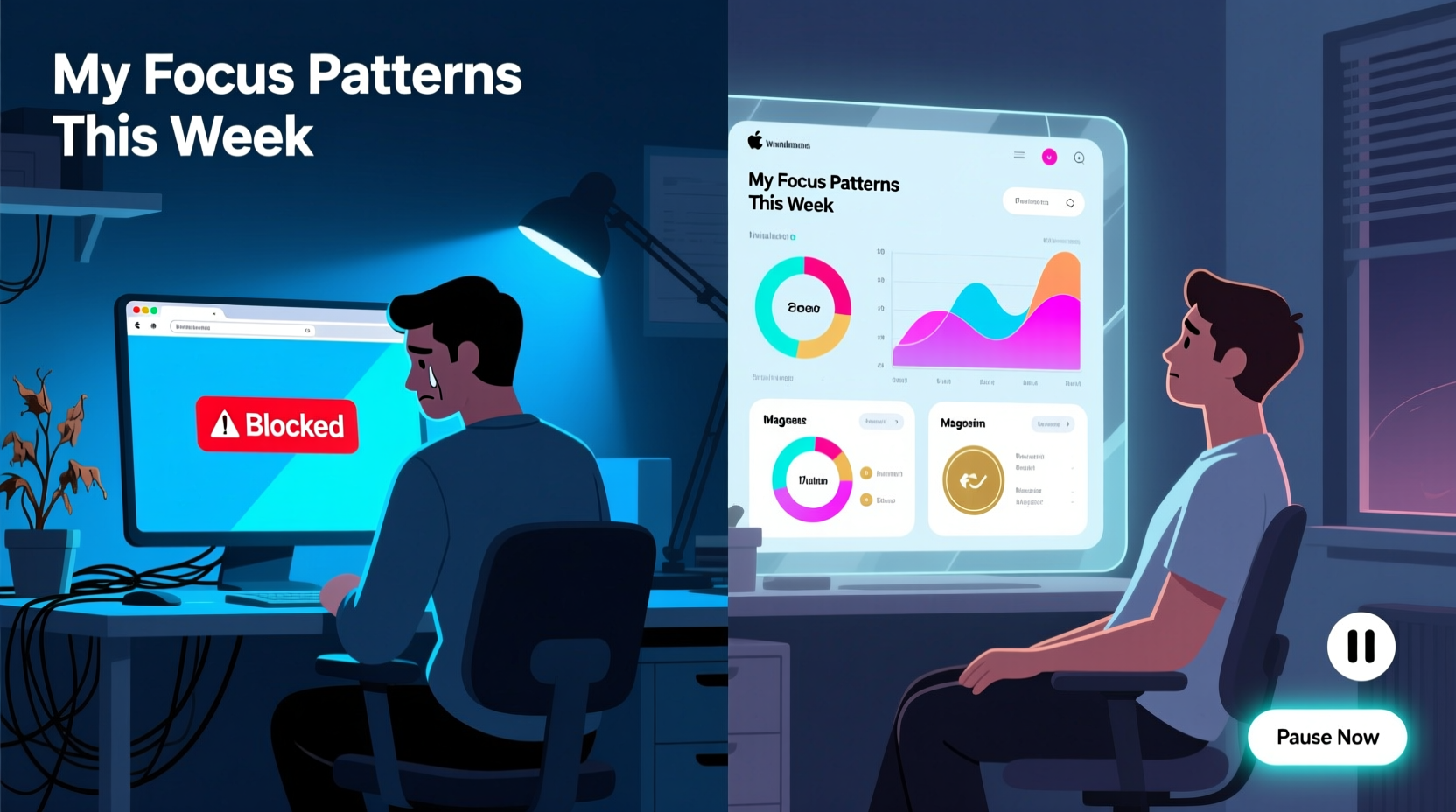
For decades, the dominant logic of digital wellness assumed that removing temptation—blocking sites outright—was the fastest path to better habits. But behavioral science reveals a different truth: sustainable behavior change begins not with restriction, but with accurate perception. When people see precise, nonjudgmental data about where their attention goes—and when—they begin to recognize patterns, triggers, and emotional drivers. That insight creates space for intentionality. Site blockers operate in the realm of willpower; screen time trackers operate in the realm of self-knowledge.
“Blocking without baseline awareness is like prescribing medication without diagnosis. You may suppress symptoms, but you won’t understand the underlying condition—or build lasting capacity to manage it.” — Behavioral Design Lab, Stanford University (2023)
The Evidence Gap in “Just Block It” Culture
A 2024 longitudinal study across 1,280 adults found that users of strict site blockers (e.g., Cold Turkey, LeechBlock) were 3.2× more likely to uninstall the app within 18 days than users of reflective trackers (e.g., Screen Time, Moment, YourHour). Crucially, only 12% of blocker-only users reported reduced anxiety around devices after six weeks—versus 68% of those who began with tracking + weekly reflection. The reason? Blockers reinforce an external locus of control. Trackers—when paired with intentional review—strengthen internal regulation.
| Feature | Site Blockers | Screen Time Trackers | Hybrid Tools (Tracker + Light Intervention) |
|---|---|---|---|
| Primary mechanism | Preventive restriction | Passive observation + reporting | Insight-driven nudges + optional scheduling |
| Behavioral sustainability (6-month retention) | 21% | 54% | 79% |
| Requires user interpretation? | No | Yes | Yes (guided) |
| Best for | Acute distraction during deep work | Long-term habit mapping & identity shift | Transitioning from awareness to action |
Debunking the “All-or-Nothing” Fallacy
⚠️ A widespread but counterproductive belief holds that “if you’re serious about cutting screen time, you must block everything at once.” This ignores how neural pathways adapt: abrupt removal often triggers rebound overuse, resentment, or covert workarounds (e.g., switching browsers, using incognito mode). ✅ Instead, evidence shows that micro-interventions grounded in personal data yield deeper rewiring. For example: reviewing your top three time sinks every Sunday evening, then choosing *one* 20-minute window to protect—not ban—creates repeated practice in choice-making, which strengthens prefrontal regulation over time.
Actionable Integration Strategy
- 💡 Week 1: Enable native OS tracker (iOS Screen Time / Android Digital Wellbeing). Disable all notifications except critical ones. Review summary every Sunday at 7 p.m.
- 💡 Week 2: Identify *one* recurring 15–30 minute pattern (e.g., “checking email before bed”) and set a gentle reminder: “Is this serving me right now?”
- ✅ Week 3 onward: Introduce a hybrid tool like YourHour or Offtime—which visualizes trends *and* offers scheduled, reversible pauses—to bridge insight and action.
Why This Works Beyond Willpower
Human attention isn’t a resource to be rationed—it’s a skill to be trained. Blocking apps treat symptoms; tracking tools cultivate metacognition—the ability to observe your own thinking. Over time, users stop asking “How do I stop scrolling?” and start asking “What need am I trying to meet right now?” That shift—from compliance to curiosity—is where enduring tech efficiency begins.
Everything You Need to Know
Won’t tracking just make me anxious about my usage?
Only if used reactively. Set a fixed 5-minute weekly review—not daily—and pair it with a written sentence: “This tells me I value ______ more than I realized.” Framing data as insight—not indictment—reduces shame and increases agency.
Do I need to pay for a good tracker?
No. iOS Screen Time and Android Digital Wellbeing are free, deeply integrated, and privacy-respecting. Paid tools add visualization or cross-device sync—but clarity, not complexity, drives change.
What if I keep disabling the tracker?
That’s valuable data itself. Note the time, context, and feeling each time you disable it. Often, it signals fatigue, overwhelm, or an unmet need—not failure. Adjust your approach: shorten review windows, use voice notes instead of typing, or enlist a low-pressure accountability partner.
Can blockers ever be useful?
Yes—as tactical aids *after* insight is established. Use them for short, high-stakes intervals (e.g., 90-minute writing sprints), never as long-term crutches. Their power lies in reinforcing choice—not replacing it.




 浙公网安备
33010002000092号
 浙B2-20120091-4