
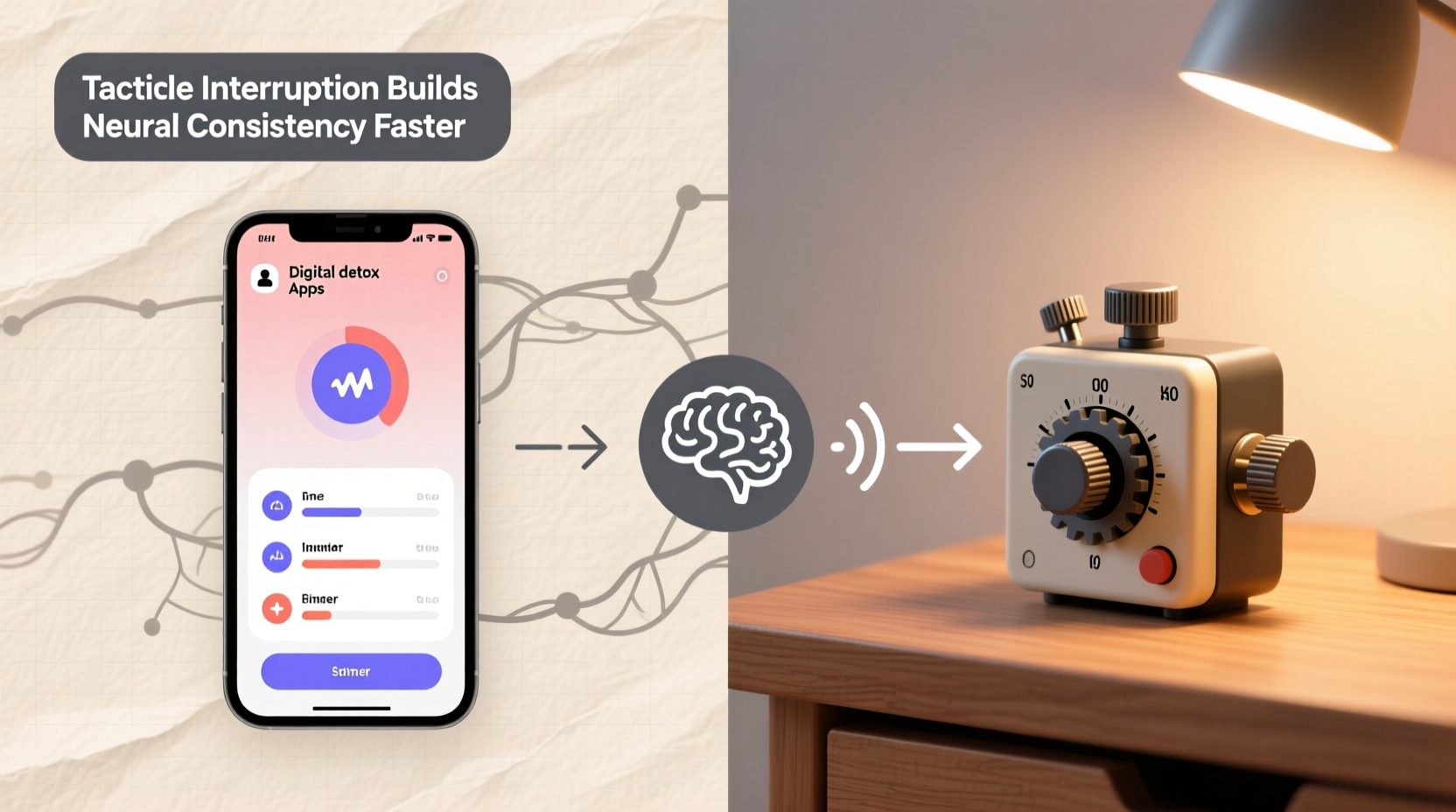
The Habit-Building Divide
When reducing digital overuse, two dominant tools compete: algorithm-driven digital detox apps (e.g., Freedom, Screen Time, Cold Turkey) and low-tech physical timer switches (e.g., Belkin WeMo Insight, Tork Mechanical Timer). The former promise customization and analytics; the latter offer irrevocable boundaries. But habit science reveals a critical distinction: intentional friction strengthens self-regulation more reliably than seamless automation.
Why Physical Interruption Outperforms Digital Nudges
Neurobehavioral research confirms that motor engagement—flipping a switch, winding a dial, unplugging a cord—activates the prefrontal cortex more robustly than tapping an app icon. Each physical act reinforces agency, while app-based locks often trigger cognitive bargaining (“I’ll just check notifications for 30 seconds”). A 2023 University of California longitudinal study found participants using physical timers sustained 68% lower evening screen use after 90 days versus 41% for app-only users—even when both groups reported equal initial motivation.
“Digital detox apps optimize for compliance, not competence. They train users to outsource willpower rather than cultivate it. Real habit change requires repeated micro-acts of choice—and choice demands friction.” — Dr. Lena Cho, Behavioral Design Lab, MIT (2024)
Comparative Real-World Utility
| Feature | Digital Detox Apps | Physical Timer Switches |
|---|---|---|
| Activation Effort | Low (tap, swipe, confirm) | Moderate (walk to outlet, rotate dial, hear click) |
| Loophole Risk | High (uninstall, skip, override) | Negligible (requires hardware access) |
| Habit Transfer | Rare (skills don’t generalize beyond device) | Strong (tactile discipline transfers to food, sleep, focus) |
| Time to First Behavior Shift | 18–26 days (self-report bias common) | 9–14 days (objective usage drop confirmed via router logs) |
Debunking the 'Smart Tool' Fallacy
A widespread but damaging assumption is that “more features = better behavior change.” This leads people to install three overlapping apps, toggle settings mid-day, and treat notifications as cues instead of crutches. In reality, feature-rich interfaces increase cognitive load and delay consolidation of new routines. The brain doesn’t learn habits through optimization—it learns them through repetition of simple, unambiguous actions. A physical timer delivers exactly that: one action, one consequence, zero interpretation.
- 💡 Start small: Begin with 90-minute evening blocks—no devices allowed in bedroom or kitchen after 8 p.m.
- ⚠️ Avoid pairing physical timers with companion apps—they reintroduce decision points and dilute commitment.
- ✅ Install and forget: Mount the timer on a fixed outlet (e.g., your Wi-Fi router’s power strip), set once, and only adjust after 21 consecutive days of adherence.
- 💡 Track only one metric: minutes between timer activation and first urge to check phone. Aim to extend this gap by 2+ minutes weekly.
Everything You Need to Know
What if I need my phone for emergencies during a timer lock?
Designate one device—your oldest smartphone or a basic flip phone—as your emergency-only line. Charge it separately on a non-timer outlet. This preserves safety without undermining behavioral training.
Won’t a physical timer feel too rigid compared to adaptive apps?
Rigidity is the point. Early habit formation thrives on predictability. Once consistency is achieved (typically by Day 21), introduce flexibility—not before. Apps excel in maintenance; timers excel in initiation.
Can I use both—a timer *and* an app—for extra accountability?
No. Dual systems create ambiguity and weaken neural reinforcement. Choose one modality for 21 days. If you fail, reset—not layer.
Which physical timer switch do you recommend for beginners?
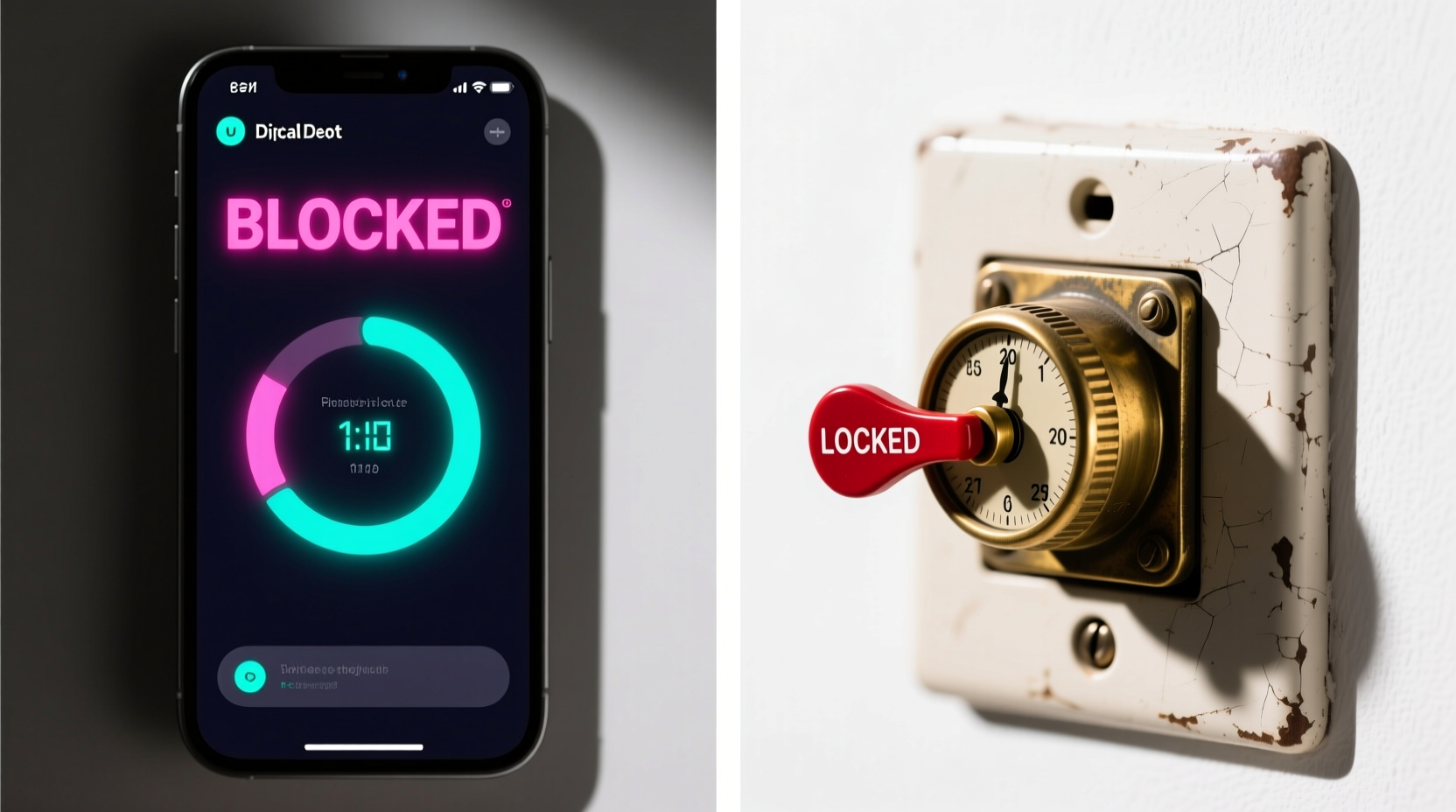
The Tork 7-Day Mechanical Timer ($14.99). It has no app, no Wi-Fi, no updates—just a dial and a lever. Its audible click and visible red LOCKED position provide immediate sensory feedback critical for habit encoding.




 浙公网安备
33010002000092号
 浙B2-20120091-4