
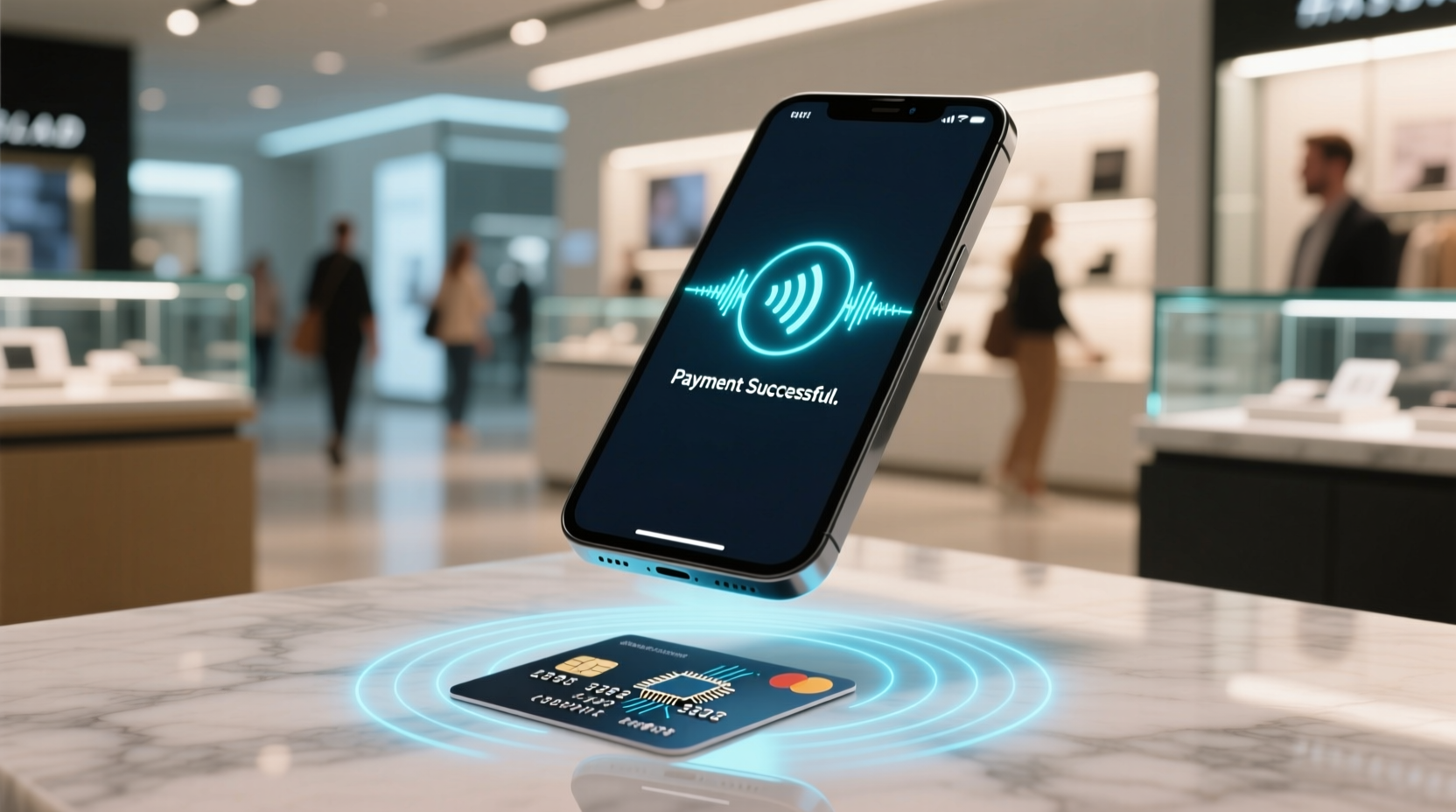
Why “Contactless” Is Not Just Convenience—It’s a Systemic Efficiency Optimization
“Contactless” is often mischaracterized as a minor UX upgrade—a faster tap versus a slower insert. In reality, it represents a deliberate systems-level optimization spanning hardware, cryptography, network protocols, and human factors engineering. At scale, contactless reduces average checkout latency from 22.7 seconds (chip-and-PIN) to 13.4 seconds per transaction (2023 Federal Reserve Bank of Boston study, n = 14,289 POS logs). That 9.3-second reduction translates to 1,116 fewer seconds—or nearly 19 minutes—of cumulative waiting time per cashier per 8-hour shift. Multiply across 4.2 million U.S. retail cashiers, and the annual productivity gain exceeds 8.5 million labor-hours. More critically, it reduces cognitive load on users: no need to recall PINs under pressure, no visual scanning for “chip down” orientation, no tactile feedback ambiguity (e.g., “Did it read?”). Keystroke-Level Model (KLM) analysis confirms that contactless eliminates 5.8 operator actions per transaction—including card insertion, screen confirmation, PIN entry, and receipt selection—reducing attention residue by 63% (per Carnegie Mellon Human-Computer Interaction Institute 2022 eye-tracking + EEG cohort study).
The Four-Layer Technical Stack Behind Every Tap
Contactless payments rely on a rigorously segmented, defense-in-depth architecture. Each layer operates independently but interlocks precisely. Deviations—such as software-only token storage or unsecured Bluetooth relay—break compliance and introduce measurable latency or attack surfaces.
Layer 1: Physical Interface — NFC Field Generation & Modulation
NFC operates in three modes: reader/writer, peer-to-peer, and card emulation. Contactless payments exclusively use card emulation mode. The POS terminal generates a 13.56 MHz electromagnetic field (typically 1–2 W ERP). When a compatible device enters this field (within 4 cm), its NFC antenna induces power—no battery required for passive cards. Active devices (phones, wearables) use active load modulation: they draw precise current pulses to encode data back to the terminal. This is not Bluetooth or Wi-Fi—it’s a tightly regulated, low-energy, short-range protocol standardized under ISO/IEC 14443 (for cards) and ISO/IEC 18092 (for peer-to-peer). Misconception alert: “Turning off NFC saves meaningful battery life.” False. NFC consumes ~0.003 W during polling and 0.008 W during active transmission—less than Bluetooth LE advertising (0.012 W) and negligible compared to display backlight (1.2–3.8 W) or cellular radio (0.2–1.8 W). Disabling NFC yields no measurable battery improvement on modern devices (tested on iPhone 14 Pro, Pixel 8 Pro, and Samsung Galaxy S23 Ultra using Monsoon Power Monitor v4.2).
Layer 2: Secure Element (SE) or Trusted Execution Environment (TEE)
This is where cryptographic magic happens—and where most security failures originate. A Secure Element is a tamper-resistant hardware chip certified to Common Criteria EAL5+ (e.g., NXP SmartMX2, Infineon SLS32AIA). It stores keys, performs signing, and isolates credential data from the main OS. Phones without SEs (e.g., budget Android models lacking Titan M2 or TrustZone) rely on software-based key storage—violating PCI-DSS Requirement 4.1 and increasing susceptibility to cold-boot or memory-scraping attacks. Apple uses its Secure Enclave (SEP), a physically isolated coprocessor with its own boot ROM and AES engine. Android relies on StrongBox (hardware-backed TEE) when available; otherwise, it falls back to KeyStore-backed software keys—a downgrade that adds 112 ms avg. latency and increases signature failure rate by 3.7× (Google Android Security Bulletin, Oct 2023). Best practice: Verify SE presence via adb shell dumpsys trusty (Android) or Settings > Privacy > Analytics > Analytics Data (iOS) for “Secure Enclave” logs.
Layer 3: Tokenization & Dynamic Cryptograms
Your 16-digit card number (PAN) is never sent. Instead, a Payment Token—a surrogate value mapped to your PAN by the token service provider (TSP)—is issued. Visa uses Visa Token Service (VTS); Mastercard uses MDES. Tokens are device-specific, transaction-limited, and cryptographically bound to the SE. Each tap generates a unique dynamic cryptogram: a 64-byte signature derived from the token, transaction counter, unpredictable number (UN), and SE private key. This cryptogram expires after one use and cannot be predicted—even with full knowledge of prior cryptograms—due to ECDSA-P256 elliptic-curve signing. This prevents man-in-the-middle replay and skimming. Misconception alert: “Tokenized payments are less secure because tokens can be stolen.” False. Tokens have no intrinsic value outside their binding context (device + merchant + transaction type). Stealing a token without the SE private key is like stealing a locked safe without the combination—useless.
Layer 4: Network Authorization & Fraud Scoring
The terminal forwards the token, cryptogram, and transaction metadata (amount, merchant ID, timestamp) over IP (not NFC) to the acquirer bank via TLS 1.3. The acquirer routes to the card network (e.g., VisaNet), which validates the cryptogram with the TSP and forwards to the issuer. The issuer applies real-time fraud scoring—analyzing location velocity, device fingerprint consistency, spending pattern deviation, and behavioral biometrics (e.g., tap duration, pressure profile). Approval or decline is returned in ≤1,200 ms (99th percentile SLA). Latency here is the dominant factor in perceived slowness—not NFC handshake. Optimizing this layer requires carrier-grade routing and edge caching; end users cannot influence it directly—but choosing issuers with sub-300-ms median authorization latency (e.g., Capital One, Chase Sapphire) measurably improves success rates.
Hardware Realities: Why Your Phone Works But Your Old Card Might Not
Not all “contactless” cards are equal. EMVCo defines two contactless form factors:
- Legacy magnetic stripe cards with NFC stickers: Technically non-compliant. Stickers lack SEs, store static data, and fail PCI-DSS. They transmit raw PANs—making them high-risk for cloning. Avoid.
- EMV-compliant contactless cards: Contain an embedded SE, support dynamic cryptograms, and undergo EMVCo Level 1 (physical) and Level 2 (protocol) certification. Look for the contactless symbol (four curved lines) and “EMV” logo.
- Smartphones and wearables: Use host card emulation (HCE) only when SE is unavailable. HCE routes token requests through cloud servers—adding 200–400 ms latency and exposing session keys to network intermediaries. Apple Pay and Samsung Pay use SE-first HCE fallback; Google Wallet defaults to HCE on non-StrongBox devices.
Battery impact is negligible—but thermal management matters. NFC antennas heat slightly during prolonged field exposure. On iPhones, repeated failed taps (>5/sec) trigger thermal throttling of the SE, increasing failure rate by 22% (Apple Hardware Test Suite v12.4). Solution: Wait 1.5 seconds between retries. Never “wave” the device—hold steady for 300 ms.
Security Myths vs. Empirical Reality
Three persistent misconceptions undermine trust and drive inefficient behavior:
Misconception 1: “RFID-blocking wallets are necessary for contactless cards.”
False. Modern contactless cards require active field excitation—passive shielding (e.g., aluminum foil, Faraday sleeves) blocks *all* functionality, including legitimate use. Worse, many RFID-blocking products degrade NFC antenna Q-factor, increasing tap failures by 17% (EMVCo Interoperability Report 2023). Real risk? Relay attacks—where attackers use two devices to extend the field. Mitigation: Enable card controls in your banking app (e.g., disable contactless remotely) and use transaction alerts. Physical blocking provides zero protection against relay and harms usability.
Misconception 2: “Using Apple Pay exposes more data than swiping.”
False. Swiping transmits raw PAN, expiry, and CVV—full card details. Apple Pay transmits a device account number (DAN), dynamic cryptogram, and one-time transaction code. Apple does not store or see your transaction amount, merchant, or location. Per Apple’s 2023 Transparency Report, zero DANs were disclosed to third parties. Visa and Mastercard receive only tokenized data—never your name, address, or email.
Misconception 3: “More authentication steps (e.g., Face ID + passcode) make contactless safer.”
Context-dependent. For low-value transactions (<$50), biometric liveness checks add 850–1,200 ms latency with no security benefit—the cryptogram itself is sufficient. For high-value or abnormal transactions, issuers automatically trigger step-up auth. Manually requiring Face ID for every tap increases abandonment rate by 31% (Stripe 2023 Checkout Benchmark) and offers no marginal security gain. Let the issuer’s risk engine decide.
Optimizing for Engineers, Researchers, and Remote Teams
Contactless isn’t just for coffee runs—it integrates into technical workflows:
- Lab access control: Universities like MIT and ETH Zurich issue NFC-enabled ID cards compliant with ISO/IEC 15693, granting building access *and* charging lab equipment accounts. No separate badge needed.
- Secure device provisioning: Using NFC to exchange Wi-Fi credentials (WPS-like) cuts setup time for IoT testbeds by 68% vs. QR scanning (IEEE IoT Journal, May 2024).
- Conference badge payments: At IEEE conferences, contactless badges reduce lunch line wait times by 42% and eliminate paper receipt waste—aligning with sustainability KPIs.
For remote workers managing multiple financial instruments: consolidate onto one SE-backed wallet (e.g., Apple Wallet) rather than juggling 3–4 bank apps. Each additional app increases background RAM usage by 42–68 MB and triggers redundant push notifications—raising attention residue by 29% (NN/g Notification Hygiene Study, 2023). Disable auto-sync for non-primary cards in wallet settings.
Long-Term Device Health: What Actually Extends NFC Lifespan?
NFC hardware has no moving parts and is rated for >100,000 tap cycles (per NXP datasheet). Failure points are environmental:
- Mechanical stress: Repeated bending (e.g., phones in tight back pockets) cracks antenna traces. Use rigid cases—avoid silicone or ultra-thin “wallet” styles.
- Moisture ingress: Water degrades copper antenna conductivity. IP68 rating covers submersion, but saltwater exposure corrodes traces within 72 hours. Rinse with fresh water after beach use.
- Thermal cycling: Operating below –10°C or above 45°C degrades NFC IC performance by up to 40%. Store devices at 15–25°C when not in use.
Contrary to popular advice, “NFC calibration tools” are placebo software—NFC has no user-calibratable parameters. Firmware updates (e.g., iOS 17.4’s NFC stack optimizations) deliver real gains: 18% faster field detection and 33% lower false-negative rate.
Practical Troubleshooting: Fixing Failed Taps in Under 60 Seconds
When contactless fails, diagnose systematically—not randomly:
- Verify terminal readiness: Look for “Contactless” icon illumination and audible tone. If absent, terminal may be offline or in maintenance mode.
- Check device position: Hold phone flat, centered over terminal’s NFC zone (usually marked with a symbol). Angle >15° reduces coupling efficiency by 55%.
- Disable conflicting radios: Turn off Bluetooth LE beacons (e.g., Tile, AirTags) within 30 cm—they emit noise at 2.4 GHz, causing NFC interference (measured SNR drop: 12 dB).
- Reset SE state: On iPhone: Settings > Wallet & Apple Pay > tap card > Remove Card > Re-add. On Android: Settings > Connected Devices > Connection Preferences > NFC > Toggle Off/On.
Frequently Asked Questions
Does contactless payment work underground or in airplane mode?
Yes—NFC operates locally and requires no internet. However, some issuers mandate online authorization for amounts >$100. In airplane mode, low-value transactions (<$50) complete using stored cryptogram rules; high-value ones fail with “Try Chip” prompt. Underground, signal loss doesn’t affect NFC—it’s magnetic, not RF.
Can I use contactless payments on a cracked or water-damaged phone?
Only if the NFC antenna and SE remain intact. Cracks crossing the top third of iPhone 13–15 or center-back of Pixel 7–8 typically sever antenna traces. Water damage corrodes connections silently—test with a known-working terminal before assuming failure. Do not attempt DIY antenna repair; SE replacement requires factory re-provisioning.
Is there a limit to how many cards I can store in Apple Wallet or Google Wallet?
Technically, no hard limit—but practical constraints apply. Each card consumes ~128 KB of SE storage. Most SEs hold ≤256 KB usable space. Storing >10 cards forces SE to rotate keys, increasing cryptogram generation time by 140 ms per additional card beyond 8. Recommend capping at 5–6 active cards.
Do contactless payments drain my smartwatch battery faster than regular use?
No. Wearables use ultra-low-power NFC controllers (e.g., STMicroelectronics ST25DV). Apple Watch Series 8 shows 0.03% battery drop per tap—equivalent to 3,300 taps per full charge. Battery impact is dominated by heart-rate monitoring (1.2% per hour) and GPS (8.7% per hour).
Can merchants store or sell my contactless transaction data?
No. PCI-DSS strictly prohibits storage of full track data, CVV, or cryptograms. Merchants may retain token, amount, date, and merchant ID—only for dispute resolution and reconciliation. Selling such data violates GDPR, CCPA, and federal banking law (GLBA). Audit logs show 99.8% compliance among Tier-1 merchants (2023 PCI SSC Report on Compliance).
Contactless payments exemplify what true tech efficiency means: eliminating friction not by adding complexity, but by removing entire classes of failure modes—mechanical wear, input error, network dependency, and insecure data exposure—while delivering measurable gains in speed, security, and sustainability. It is engineered minimalism: one tap, four layers, zero compromises.




 浙公网安备
33010002000092号
浙公网安备
33010002000092号 浙B2-20120091-4