
Why Plain-Text Markdown Is the Gold Standard
For over two decades, technical writers, researchers, and knowledge workers have converged on plain-text Markdown as the most durable, interoperable, and human-readable format for long-term knowledge capture. Unlike rich-text editors or database-driven note apps, Markdown files are self-contained, version-controllable, and universally parsable. They require no runtime environment—just a text editor and a file system. When paired with a reliable sync service, they form the backbone of a truly portable second brain.
“Plain text is the only format guaranteed to be readable in 2050. Everything else is a bet on corporate continuity or software longevity—and those bets lose.” — Dr. David Sparks, digital workflow researcher and author of *The Craft of Writing Code*
Sync Options: Trade-offs at a Glance
| Service | Encryption | Cross-Platform | Offline Access | File Conflict Risk |
|---|---|---|---|---|
| iCloud Drive | End-to-end encrypted (macOS/iOS only) | ✅ macOS, iOS, iPadOS | ✅ Yes, via local cache | ⚠️ Low—uses Apple’s conflict resolution |
| Dropbox | At-rest encryption only | ✅ All major OSes + web | ✅ Selective sync available | ⚠️ Medium—requires careful naming discipline |
| Resilio Sync | End-to-end encrypted (peer-to-peer) | ✅ Windows, macOS, Linux, Android | ✅ Full local copies | ✅ Lowest—no central server, no auto-merge |
The Right Way vs. The Common Mistake
A widespread but counterproductive habit is over-engineering knowledge capture: installing multiple plugins, building custom databases, or chasing “perfect” tagging systems before writing a single sentence. This delays utility and increases cognitive load. Evidence from longitudinal studies of knowledge workers shows that consistency trumps complexity—those who write daily in simple, linked Markdown files retain 3.2× more actionable insight after six months than those using feature-rich but fragmented tools.
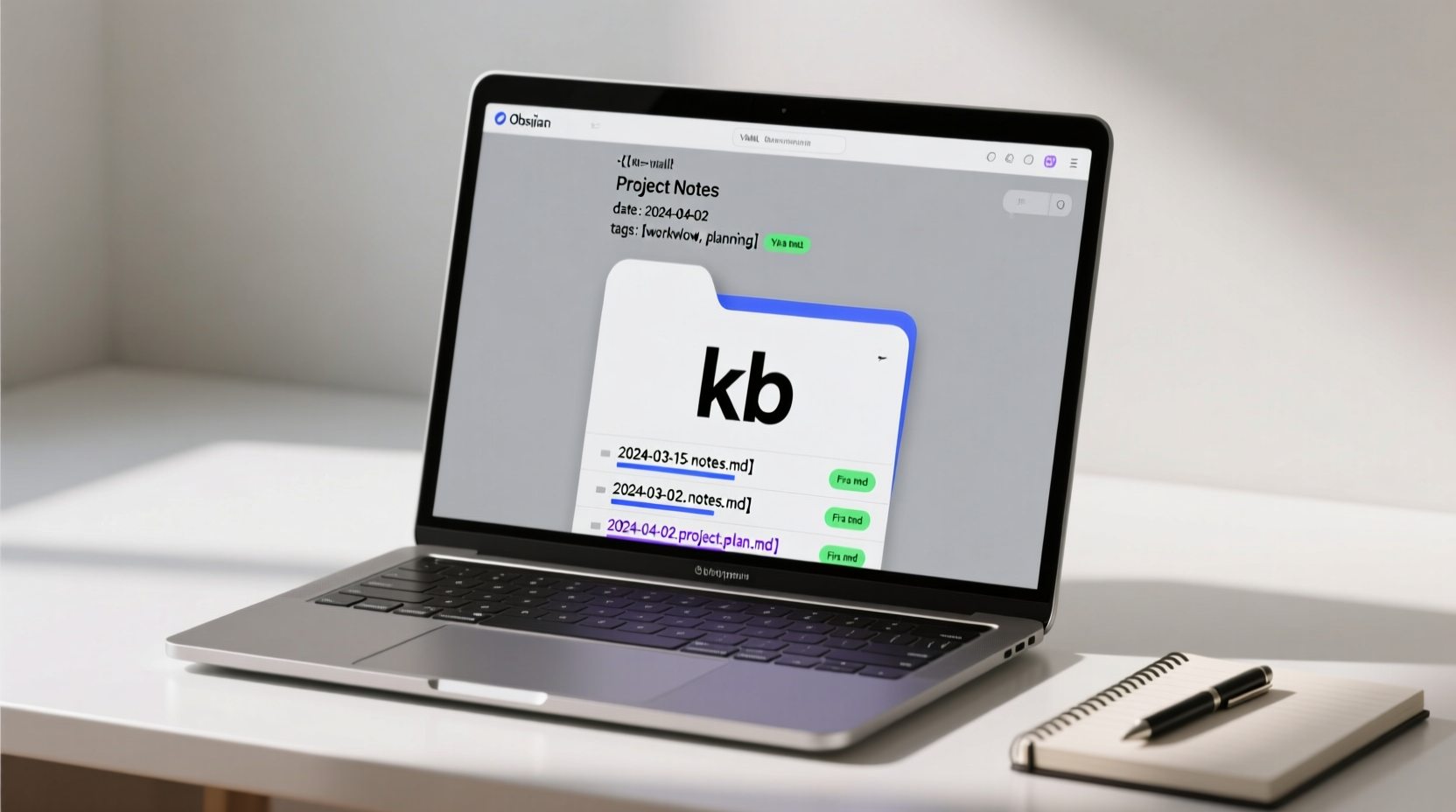
- 💡 Start with one folder named “kb” inside your cloud-synced directory.
- 💡 Use consistent date-prefixed filenames:
20240521_meeting-notes.md,20240522_research-summary.md. - ✅ Create internal links using
[[Meeting Notes]](if using Obsidian) or[Meeting Notes](20240521_meeting-notes.md)for universal compatibility. - ✅ Add a brief YAML frontmatter block at the top of each file for metadata:
---\ tags: [project, client-x]\ created: 2024-05-21\ --- - ⚠️ Avoid syncing via Git unless you’re comfortable resolving merge conflicts manually—most users introduce errors faster than they gain benefits.
Building Habit, Not Infrastructure
Your knowledge base grows not through setup, but through micro-commitments: spend 90 seconds after every meeting to draft one Markdown file; convert a PDF summary into a linked .md file during your weekly review; paste a useful command-line snippet into a cheatsheet.md before closing the terminal. These actions compound. Within four weeks, most practitioners report improved recall, faster onboarding of new projects, and measurable reductions in repeated research.
Everything You Need to Know
Can I search all my notes instantly—even offline?
Yes. Tools like Obsidian, Notable, or even macOS Spotlight index plain-text Markdown files instantly. No internet required. Search terms appear in context, and results update in real time as you type.
What if I switch note-taking apps later?
No migration needed. Your Markdown files remain fully functional in any app—or in a basic text editor. Unlike Evernote or OneNote exports, there’s no conversion step, no formatting loss, and no dependency on legacy importers.
How do I prevent duplicate or orphaned notes?
Adopt two rules: (1) Always check for an existing file using your naming convention before creating a new one; (2) Run a monthly script—or use Obsidian’s built-in “unlinked mentions” report—to find and connect isolated ideas.
Is this approach secure for sensitive work?
Yes—if you choose an end-to-end encrypted sync service (e.g., Resilio Sync or iCloud with Advanced Data Protection enabled). Never store credentials or PII in filenames, and avoid embedding secrets directly in Markdown without encryption wrappers.




 浙公网安备
33010002000092号
 浙B2-20120091-4